Welcome to the sixth edition of City Center Watch, my monthly-ish roundup of city-center news from the Nordics and around the Baltic Sea.
This time, the stories range from new transport connections and cultural destinations to the policy choices and small-scale experiments shaping city-center life.
Let’s dive right in.
1. Helsinki’s newest tramway brings a growing island closer to the center
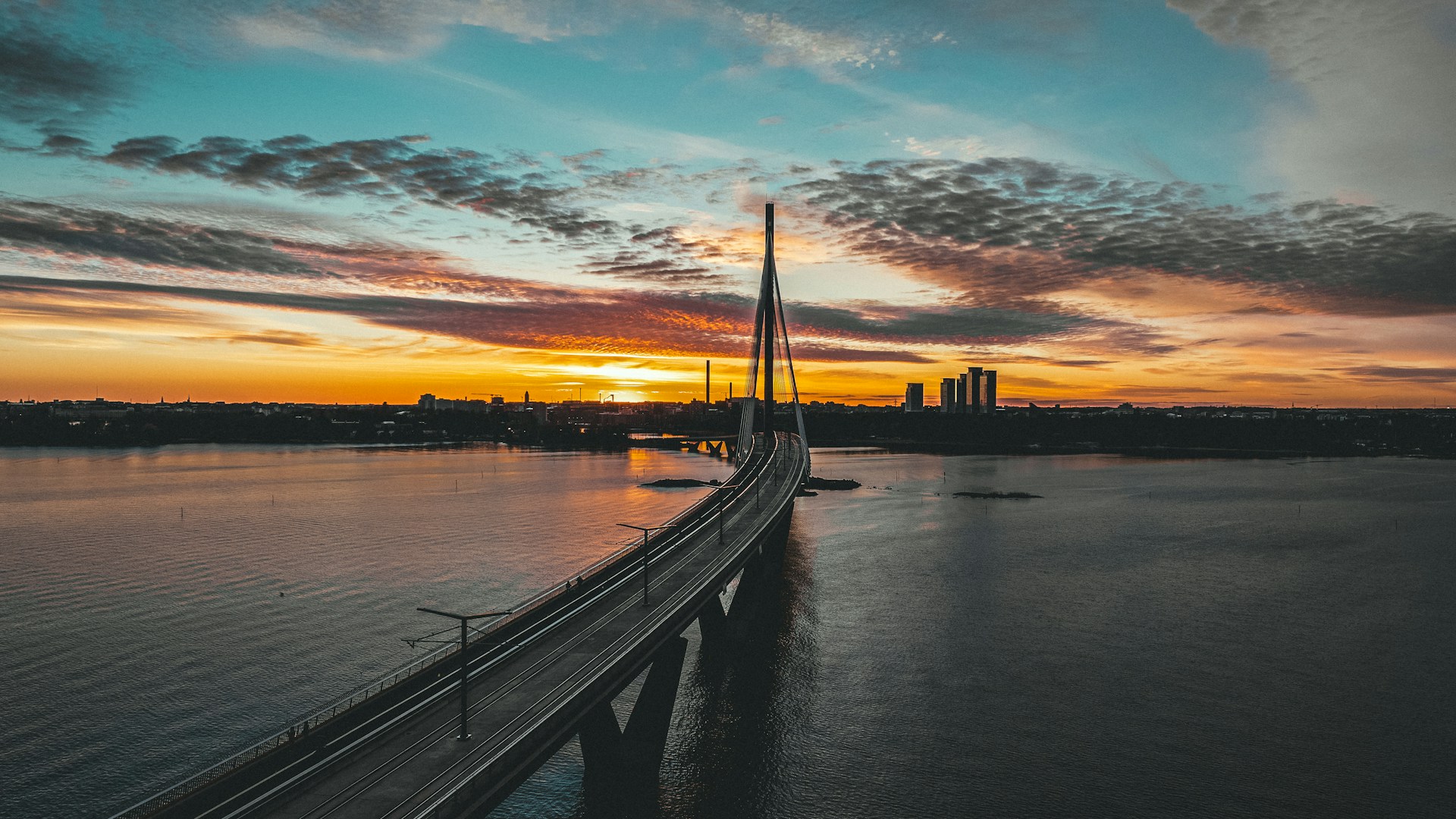
Here in Helsinki, tram services across the Kruunusillat bridges began on November 7, creating a new connection between Laajasalo and the central city. Line 12 now takes passengers from Yliskylä to the main railway station area in around 20 minutes, while line 11 connects Kruunuvuorenranta with Kalasatama and Pasila. The bridges, already open for walking and cycling, are closed to ordinary car traffic.
The new connection redraws the city center’s catchment area. Water gives Helsinki much of its character, but it also makes some relatively short distances surprisingly difficult to travel. The bridges overcome one of those barriers in a very practical way.
Laajasalo is home to around 24,000 people, and substantial growth is still ahead. Kruunuvuorenranta, on the island’s western shore, is being developed into a neighborhood for around 13,000 residents in total, with more housing also planned elsewhere on the island. The tramway gives this growing population a more direct relationship with the center.
That matters for much more than commuting. Meeting a friend, going to a concert or visiting a particular shop becomes easier when the journey is straightforward.
There is a visitor angle, too. The bridge crossing offers spectacular views of the sea, islands and Helsinki’s shoreline. The journey itself is something to experience. And Korkeasaari Zoo now has its own tram stop, putting it within an easy ride from the railway station area.
The new connection works in both directions. It brings a growing residential area closer to the center’s services and attractions, while giving people already in the center a simple way to explore maritime Helsinki. A city center’s appeal depends partly on what lies beyond it, and how easily people can move between the two.
2. Turku’s riverfront cultural district begins to take shape
Turku’s cultural riverfront has gained two substantial new reasons to visit. Musiikkitalo Fuuga opened on October 26, followed a few days later by the reopening of WAM contemporary art museum after renovation. Together with the neighboring City Theatre, they form a concentration of cultural destinations beside the Aurajoki.

As more shopping, services and entertainment move onto screens, cultural experiences become increasingly important reasons to visit city centers. A performance or exhibition brings people together in a particular place, often with other activities before or after the visit. Cultural institutions and the people around them also contribute to a city’s identity.
Turku has made culture a cornerstone of its city center’s future, concentrating major investments along the riverfront. The setting already draws people to walk, meet and spend time by the water. Bringing several cultural venues together allows the riverside experience to become part of a cultural visit, while their audiences also bring potential customers to nearby restaurants and other businesses.
Fuuga adds a useful everyday dimension to this. Its restaurants and rooftop viewing terrace are accessible outside performance times, so the building can be part of a visit without a concert ticket. More than 21,000 people visited during its first week.
More additions to the area are being prepared. Turku has just launched a hotel development competition for the nearby Hämähäkkitontti site, with publicly accessible services and a new connection to Samppalinnan park included in the brief. Another long-discussed proposal is a floating swimming and cultural facility, a project I worked with in a previous role. It received a building permit earlier this year, although appeals and ongoing riverbank repairs mean its timetable remains uncertain.
The interesting prospect is a riverfront where people might come for a concert but arrive early for a walk, stay for dinner or return another day for an exhibition. With Fuuga and WAM now open, more of that experience is already possible. The planned additions could make it an even more varied place to spend time.
3. Reykjavik asks what keeps a music city alive
A new study of Reykjavík’s live music scene finds that the number of live music events in the center grew by 45 percent between 2022 and 2025. Growth was strongest in large and midsized venues. At the grassroots end, in spaces accommodating around 100 people or fewer, the increase was only 7 percent.
This adds another dimension to the cultural investment story in Turku. Alongside major concert halls, cities need smaller rooms where unfamiliar acts can find an audience, musicians can gain experience and people can discover something they were not already looking for.
The Reykjavík report describes how difficult it is becoming to sustain those opportunities. Operators face rising costs, more cautious audiences and pressure from neighboring development. Noise complaints can restrict opening hours and the kinds of music a venue can accommodate. The authors warn of a possible “generational break” as opportunities for young musicians and audiences weaken.
The findings are familiar in Helsinki, too. Our own Live Music Census, published in 2025, identified similar pressures on smaller venues and their important role in maintaining a diverse music scene.
Reykjavík has already begun responding with measures to support smaller venues. Two ideas stand out from the research and policy discussions. Small and midsized venues should be recognized as cultural infrastructure, with a place in city policy comparable to libraries, museums and sports facilities. New housing and hotel developments beside established venues should also take responsibility for the sound insulation needed to coexist, allowing existing cultural activity to continue.
I think there is a question here for property owners, too. A small concert venue may struggle to pay the rent another tenant could offer. But its contribution can extend beyond its own premises. It can give a street character, attract people who also visit neighboring businesses and help make the wider area somewhere people want to be.
Some of that appeal may eventually support property values and demand for other premises. The benefits are difficult to measure, but owners with several properties in the same area may have particular reason to consider how different tenants contribute to the attractiveness of the whole place.
For cities and property owners alike, making room for less immediately profitable cultural activities may be a worthwhile investment in the wider area’s long-term appeal.
4. Copenhagen wants to stop new hotels in its historic center
Copenhagen is advancing a proposal to restrict new hotels in parts of its historic center. Covering areas including the medieval core, Nyhavn and Gammelholm, it would generally prevent new hotel uses and increases in the floor space of existing hotels, with exceptions for certain properties. The proposal received committee backing in early November but still needs City Council approval to proceed to public consultation, with a final decision expected in 2027.
This raises an interesting question for a successful city center: how do you manage strong demand for one use while maintaining room for others?
Hotels can make a substantial contribution to city-center life. Their guests support restaurants, shops and cultural venues, and accommodation can give an older building a viable new use. Turku’s plans discussed above illustrate why a city might actively seek more of it in a particular location. In fact, the politicians behind Copenhagen’s proposal also welcome new hotels in other parts of the city. Their concern is the concentration of hotels in the historic center.
When visitor accommodation becomes especially attractive to property investors, the cumulative effect deserves attention. Each conversion can make sense on its own while gradually changing who the center serves. Housing, workplaces and activities rooted in local life all need room in the same limited stock of buildings.
The risk is a center that remains busy and commercially successful but becomes increasingly oriented toward temporary visitors. Residents and other regular users sustain different services, routines and relationships. Their presence is part of what makes a place interesting to visit in the first place.
Restricting hotel conversions could preserve opportunities for those other uses. It does not, however, determine what the buildings will become. An office building prevented from becoming a hotel still needs a workable future, and conversion to housing may involve substantial technical and financial obstacles. Critics also argue that restricting hotels in the historic center could simply shift demand elsewhere.
Copenhagen’s proposal may help protect the mix of activities that gives its historic center character. But preventing new hotels is only part of the challenge. Making the alternatives work as homes, workplaces and places that Copenhageners use regularly will require further decisions and investment.
5. Odense draws lessons from its summer experiments
In City Center Watch #2, I wrote about Odense’s summer experiments and the idea of testing changes in real places before preparing a long-term plan. Now the results are in, and the city has drawn up eight principles based on the experiments and wider public consultations to guide the center’s development over the next 15 years. These are recommendations for a plan that has yet to be adopted.

Some of the findings are refreshingly simple. On Klaregade, a shopping street in the historic center, all nine businesses interviewed wanted the temporary benches retained or developed further. People used them to eat lunch, meet others and take a break, including without shopping.
At Håbets Hus, a creative and community venue on Indre Rugårdsvej, a twice-weekly vegetable market attracted an estimated 150–250 visitors per week and developed a returning audience. It gave people a regular reason to visit a place that is still establishing its role on the edge of the center.
The results were mixed elsewhere. Some activities attracted limited participation, and while one restaurant in Gråbrødrepassagen reported increased sales, other interviewed businesses generally saw no improvement. That does not necessarily mean the new greenery and seating brought no value, but it shows that a more inviting public space does not automatically translate into higher retail turnover.
The wider evaluation recommends different approaches for different shopping streets. Klaregade has a strong identity and specialty shops worth supporting with relatively modest improvements. Other streets, such as Kongensgade, may need a more fundamental rethink, with culture, everyday services and meeting places taking on a larger role.
I think that is an interesting direction for city-center development. Rather than trying to apply the same formula everywhere, Odense is looking at how different streets can build on their strengths or find new roles. Testing ideas in real life before committing to permanent changes makes it easier to see where small improvements may be enough, and where a bigger rethink is needed.
Also on my radar
Stockholm — plans to reclaim Gamla Stan’s waterfront from traffic
Stockholm’s governing parties want to stop through-car traffic in Gamla Stan, including along Skeppsbron and Munkbroleden. Local access and deliveries would remain possible, but the historic center would no longer serve as a shortcut for drivers crossing the city. The ambition is to reclaim space for greenery, walking, cycling and waterfront activities, including a new waterfront park. That could make a striking difference to how people experience Gamla Stan. The surrounding water is one of its greatest assets, yet much of the shoreline is dominated by traffic. Turning some of that space into places to walk, relax and enjoy the waterfront would be a major improvement.
Szczecin — new homes and shops for the Old Town
Construction has begun on one of the last vacant plots in Szczecin’s Old Town, near the historic Baszta Panieńska tower. Earlier plans for a hotel have given way to a development with 95 apartments, nine ground-floor commercial premises and a green courtyard. The shift from hotel to housing is particularly interesting here. It brings more permanent residents and everyday activity into the historic core, rather than adding another visitor-oriented use. The project also shows how a historic city can continue to grow, accommodating contemporary architecture within its traditional block structure.
Tallinn — a playful future for Town Hall Square
Tallinn has selected a winning design for the redevelopment of its historic Town Hall Square. The proposal, called Pusle (Puzzle), introduces playful, movable urban furniture that can be rearranged for different seasons and events, from a summer park to the traditional Christmas market. The ambition is to make this important heritage setting more useful throughout the year. It’s good to see such a playful approach in a historic setting. Historic squares are often treated primarily as places to admire, but they can also be places to play, meet people and spend time without any particular purpose.
Warsaw — improvements for a major pedestrian artery
Warsaw has started rebuilding Aleja Centralna, a busy pedestrian connection between Metro Centrum and the main railway station. Three existing passages will be upgraded with smoother paving, seating, greenery, lighting and pergolas. The project is another piece of the city’s Nowe Centrum Warszawy program, which keeps delivering improvements to central public spaces. One of the program’s strengths is its focus on places where people already are. Alongside more ambitious transformations, Warsaw is making everyday routes and spaces more comfortable and attractive. Thousands of people use this particular connection every day, so even relatively modest improvements can make a real difference.
Kiel — a campaign to keep customers coming through construction
Kiel-Marketing has launched a campaign to support businesses during the reconstruction of Holstenstraße, the city’s main pedestrian shopping street. Customers spending at least €20 in participating shops receive a chance to win shopping vouchers, while free hot drinks and small gifts add some cheer to the construction area. The construction site is also being temporarily cleared for the Christmas shopping season. This is a practical example of the challenge discussed in CCW #5: keeping city-center businesses accessible and attractive during disruptive improvements. It also highlights the role of a city-center management organization. Beyond coordinating stakeholders, it can organize joint activities that help businesses maintain their relationship with customers while the streets around them are being rebuilt.
Malmö, Bergen and Tampere — bike sharing takes different paths
Three cities reported rather different experiences with bike sharing. In Tampere, ridership reached a record 280,000 trips in 2026, up 19% from last year. Malmö, where the system recorded over a million trips in 2025, is adding new stations and making its bikes free for 18–25-year-olds. Bergen, meanwhile, has closed its conventional bike-share system after annual trips fell from over a million in 2020 to around 200,000 in 2026. The city partly attributes the sharp decline to competition from e-scooters and plans to introduce electric rental bikes through a new concession-based system in 2027. Similar services, very different trajectories. A bike-sharing system’s success depends in part on how well it fits into local travel habits and the wider mobility offer.
Oslo — more street life to improve safety in Grønland
In Oslo, businesses and police are working together on ways to make Grønland more attractive and safer. The local business association proposes temporarily waiving municipal fees for outdoor seating in selected areas to encourage more activity on the streets. The inspiration comes from nearby Torggata, which has transformed from a street associated with drug dealing into a lively nightlife destination. Improving safety, and especially how safe people feel, is important for city-center vitality. The cooperative approach is especially interesting, as no single actor can solve such a complex problem. More active streets can help, but lasting improvements also require addressing the underlying social problems rather than merely moving them elsewhere.
Hamburg — another five years for the Passagenviertel BID
Hamburg has renewed the Passagenviertel Business Improvement District for another five years, with around €5 million raised through a levy on local property owners. Now entering its fourth term, the BID illustrates how the priorities of city-center cooperation can change over time. Earlier investments transformed the streetscape, while the new program focuses more on maintaining those improvements, managing the district and organizing lighting, events and other activities. It is a useful example of what long-term commitment to a place can achieve. Improving a shopping district is not a one-off project. Once the physical changes are complete, somebody still needs to look after how the place works.
Leave a Reply